About the Explorateur
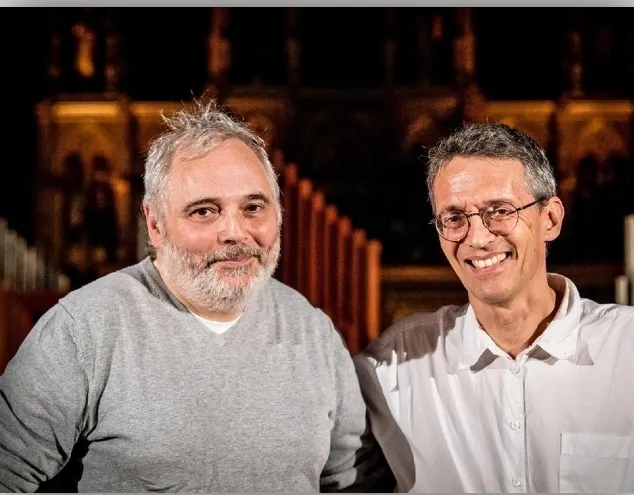
Author: Yves Rechsteiner
The origin
The idea of a transportable pipe organ came when I was appointed in 2013 Artistic Director of Toulouse les Orgues, one of the major organ festival in Europe. The aim was to have an instrument performing out of churches for any musical project with pipe organ. Having seen already l’Orgue du Voyage made by Jean-Baptiste Monnot, I saw the musical potential of a transportable organ for the Festival.
After some years, Toulouse les Orgues had to admit that finding the finances to build this organ would be too demanding. The project was therefore abandoned in 2017.
Two years later, I met Tony Decap through a teaser of the show of Stefan Eicher, Die Automaten. Tony Decap had the experience of building movable pipe organs and had already developed a very efficient system of wind control which I had never seen before. Therefore I decided to order a MIDI controlled instrument for me and to the disposal of Toulouse les Orgues’s activities.
I found second hand pipework for my organ, mainly from end of XIXth and beginning of XXth century origin. Jean Daldosso was engaged to do the voicing, and the Orgelbau Orglez from Bretagne/France, to make some new free-reed pipes.
Building l’Explorateur
From the beginning the organ should be able to travel in a 20m3 van, and not weight more than 1200kg. All technical choice were made according to this first constraint.
The construction began in 2021. During the building, Tony asked me if I would agree to experiment on my instrument a new system controlling the wind not for each chest but for each pipe. On paper, this looked fantastic, so I said « yes » instantly. But none of us had any idea of the time and energy that it would cost to achieve this new technology.
The instrument was named l’Explorateur, a very prophetic name!
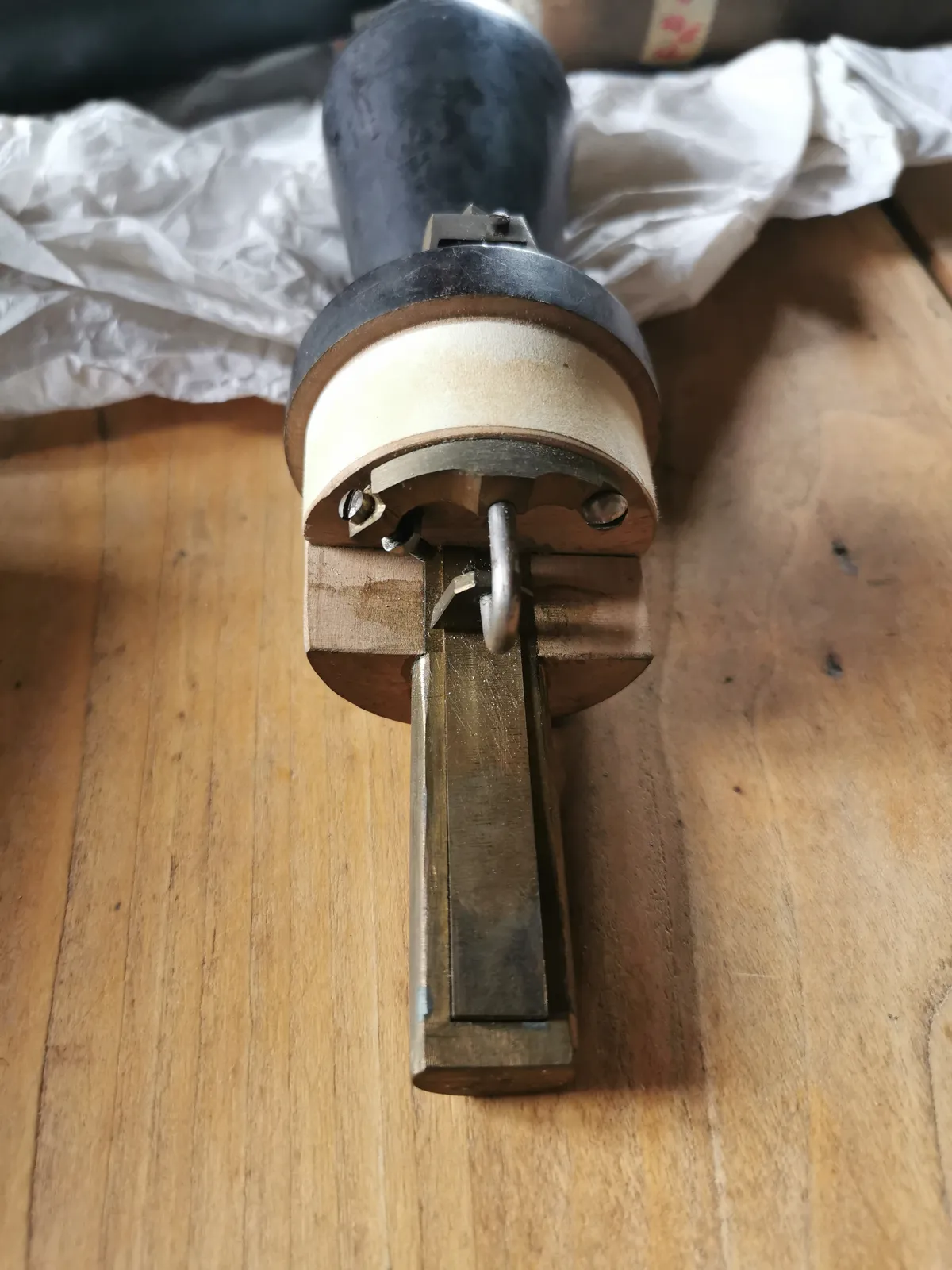
After 2 years of work and research l’Explorateur was playable with a first generation of valves, called IPU, for Individual Pressure Unit, small loud-speakers converted into valves The result was mind-blowing, specially when played from a computer, allowing a very subtle control of the sound of each pipe.
This first version of the organ showed the huge potential of this technology but also all the technical points that could be improved.
Soon Tony Decap decided to design his own type of valves and have them engineered in a factory. This was the beginning of the SmARTvalve, a second generation of valves developed between end of 2023 and end of 2025 implying the complete change of the architecture of the electronics of the modules for a more reliable, precise and accurate wind control.
These recent developments, together with the improvement of the chest design, explains why l’Explorateur is still in the process of up-date in 2026: new valves, new chests, software for the console, and tonal adjustment.
With the smARTvalve the wind is regulated a few millimeters from the pipe's foot. For transport it means that there is not need of any regulators anywhere: just the blower and a tube divider box to distribute the air from the blower to the number of chests. For L'Explorateur it means an easy setup of less than 2 hours from the truck arriving to playing.
For pressure stability it means that fluctuating wind pressure coming from any source is counteracted immediately by the smARTvalve. Even playing one small pipe and then activate 20 other pipes will not show any instability because the valve will immediately measure the pressure drop on the input side, and react by opening the valve more.
L’Explorateur: between classical organ and acoustic synthesizer
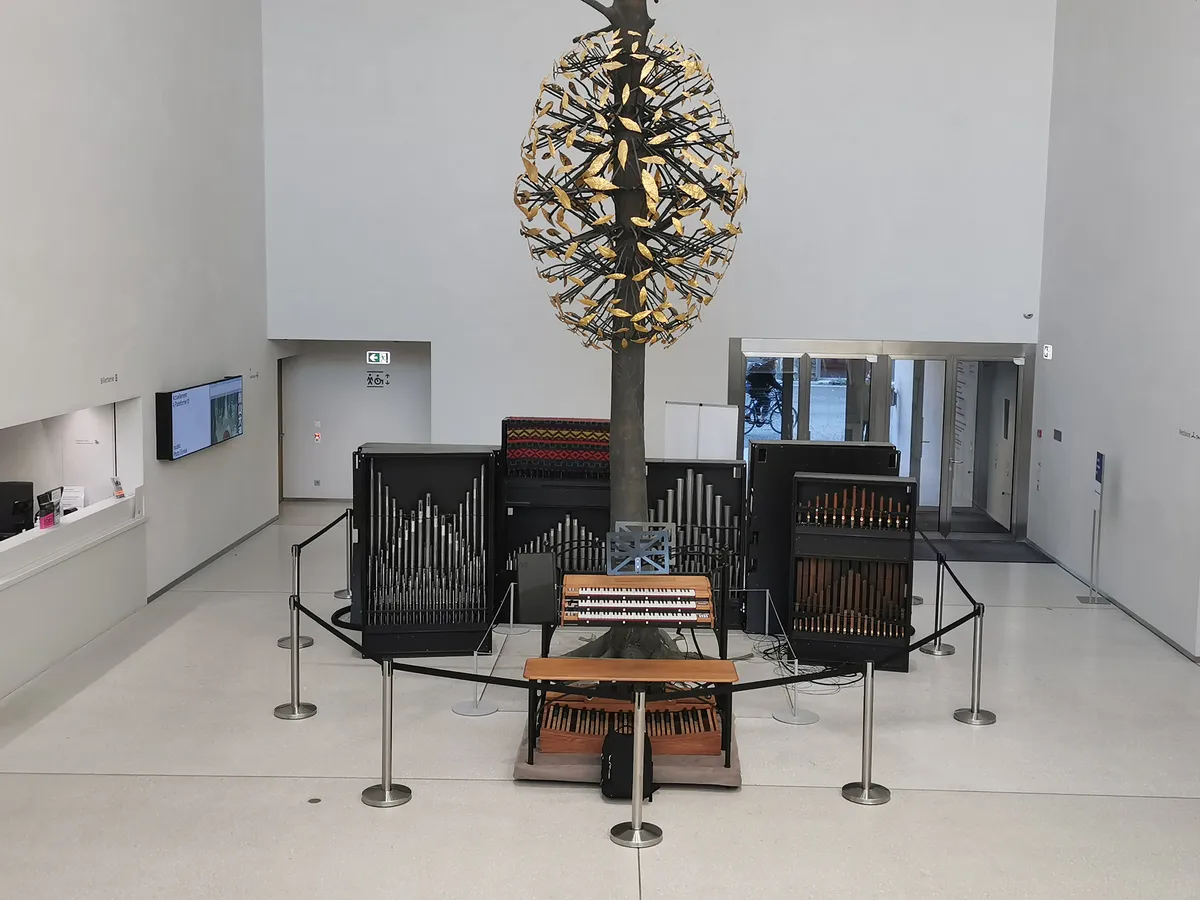
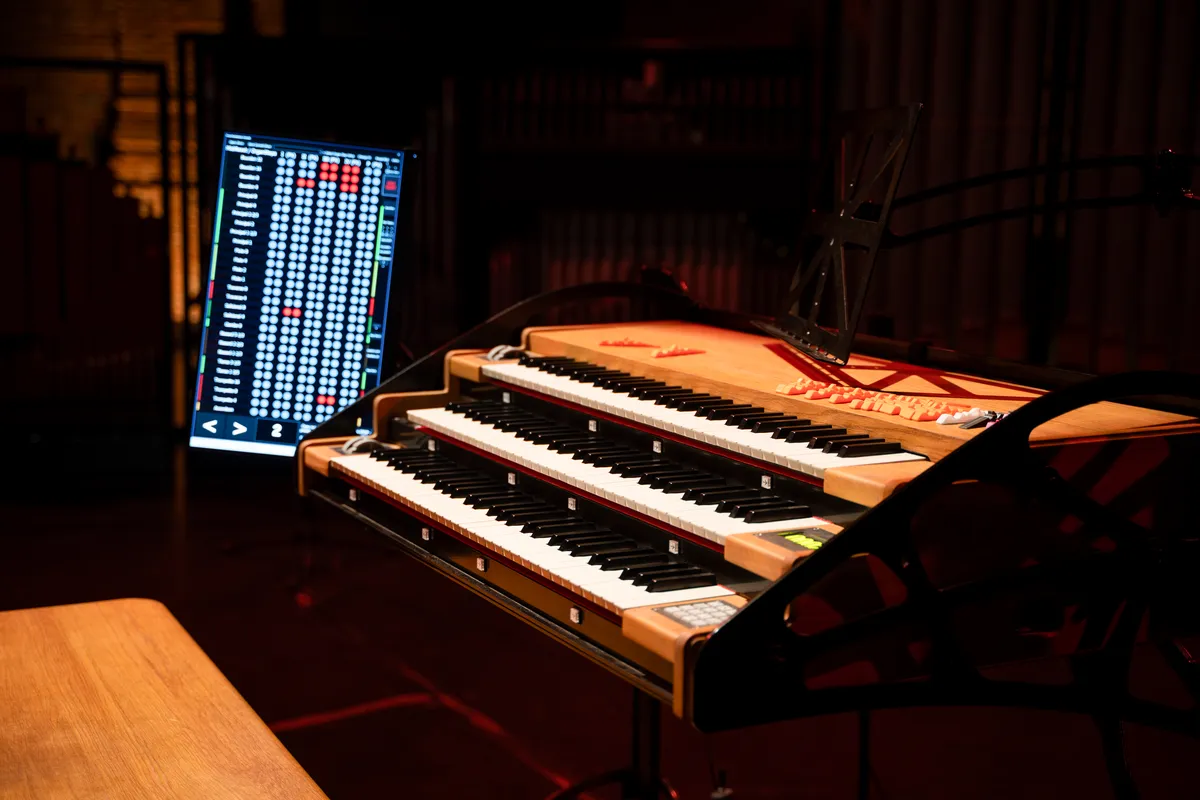
L’Explorateur can be used in two different ways: like a classical organ from the console with manuals and pedals, or directly from a computer.
From 2023 to today, it played in more than 30 performances.
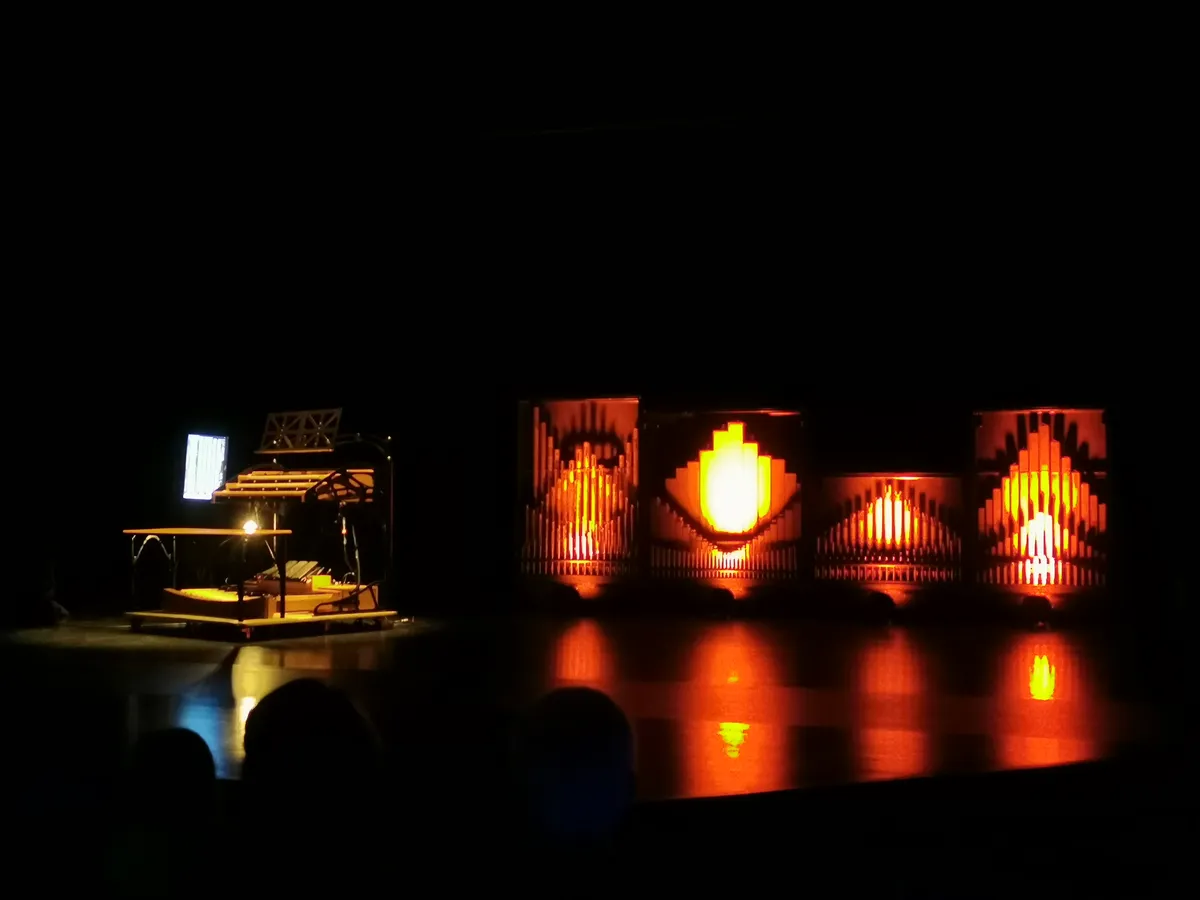
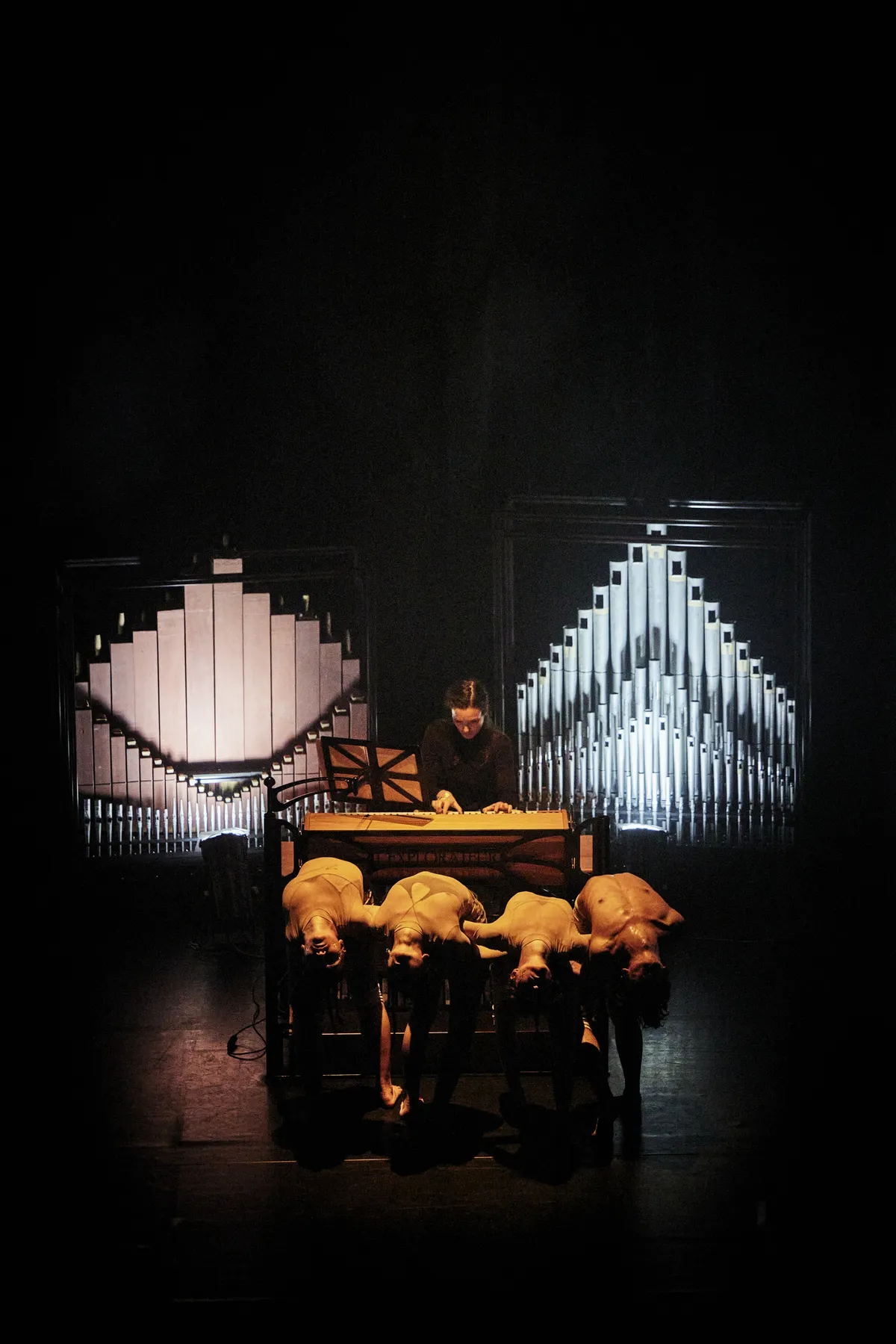
As a classical organ it served already in most of the expected situations: accompanying choirs (Vierne’s Mass or Fauré’s Requiem, Escaich’s vocal music), vocal ensembles, orchestras (Poulenc Organ’s Concerto), playing in solo, with percussion, with solo singers, with brass band, etc… L’Explorateur performed in churches, museums, theaters, auditoriums, adapting to very different stage situations and sizes.
As a MIDI controlled organ, l’Explorateur was used by the duo Gamut from Berlin and by George Rahi from Toronto in residencies for Toulouse les Orgues.
When used from a computer, l’Explorateur is a real world of sounds. With 50 pipes of Flute, an organist is accustomed to play 50 sounds. With the wind control, these 50 pipes offer an infinity of sounds from soft whistle to overblowing wild sound. These 50 pipes become a field of sound research in themselves.
This explains why sometimes only a part of the organ is used for performance, because not all potential of its 500 pipes can be explored in a limited time.
First experiences
My first surprise was to see how much the sound of the organ changed from one acoustic to the other. Moreover the placing of the modules changes the projection of the sound in the room. The same Flute module has a different sound when placed in the front, on the side or behind another module. This makes the organ infinitely flexible but it forces the organist to change the registration consequently ! The experience shows that each module can be thought like an independant organ or like an independant division of an organ.
The sound characteristics
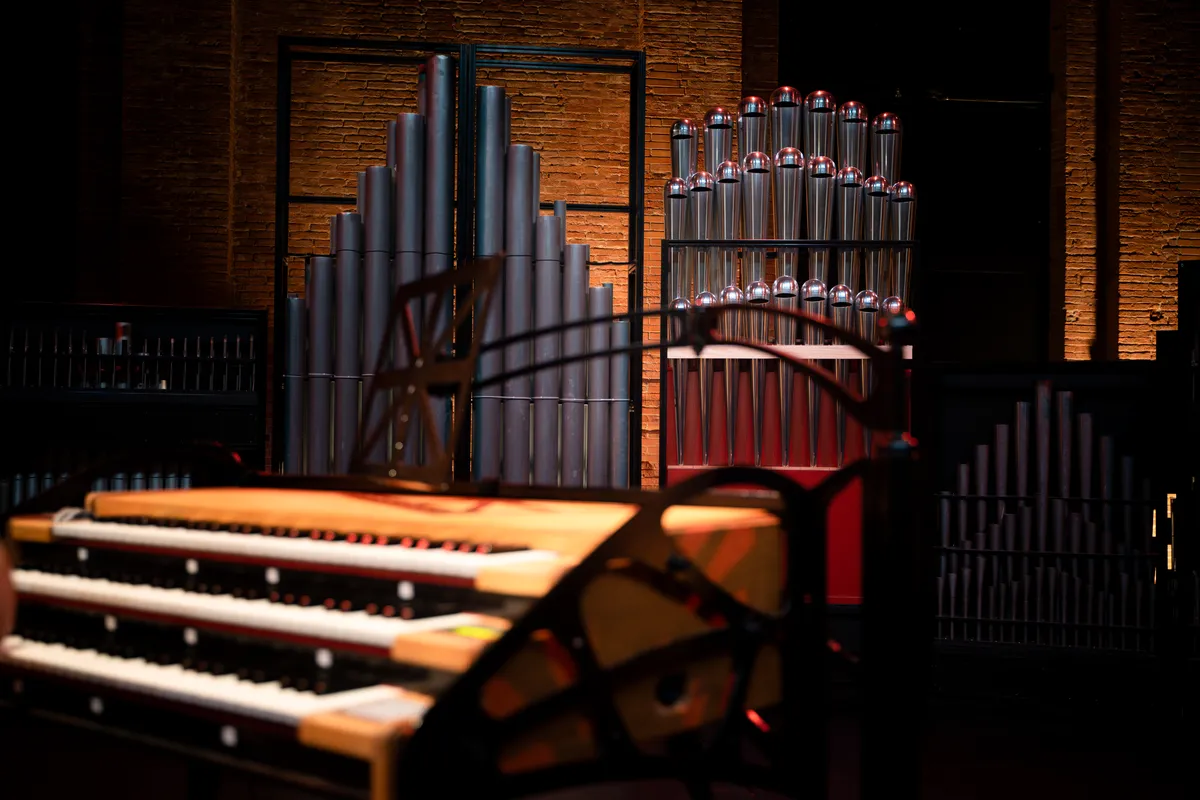
The original plan was to have the most specific sounds of an organ: Bourdon, Flûte, Principal, Gamba, mutations like Nasard and Tierce, and a few reed from loud to soft, available at various octaves, according to the number of pipes.
The availability of wind-control pushed me to go for free-reeds along the Trompette, because they change of dynamic without changing of pitch.
The first version of l’Explorateur had the following ranks and stops:
- Bourdon 16’ to 4’
- Principal 8’ to 1’
- Flute 8’ to 1’ (pipes only from second octave)
- Wooden Traverse Flute 8’ (pipes only from second octave)
- Salicional 8’
- Gamba 8’ and 4’ (pipes only from second octave)
- Nasard
- Tierce
- Trompette 16’ to 4’ (with new free-reeds for the first 2 octaves)
The organ had 10 modules, 679 pipes planned, with some ranks, Principal, Traverse, doubled on some octaves to have a richer sound.
One rank of free-reed from a Muller Orgue expressive from 1830 will be added in 2026.
One rank of Zacharias pipes will be conceived and built later.
According to experience, following changes are planned or made:
All 8’ pipes, measuring 2m50 long appeared to be too heavy to carry. This implied to add temporarily digital sounds to replace these pipes. In the future, the 16’ Ophicléide reed will be rebuilt in a lighter version, the Bourdon sound will remains digital, and the Principal and Salicional bass pipes will be replaced by polyphone pipes making several notes from the same pipe.
Some adjustments of pipes: some double rank of pipes were abandoned to gain space and tuning time. In the same logic the Nasard pipes was replaced by Bourdon pipes. Some ranks need to be completed in the treble: Bourdon and Gamba will have full range in the 4’.
Rebuild the modules with standard identical dimensions to simplify the transport. Add new swell-boxes designed by Tony Decap to improve the dynamic range to very soft sounds.
The final version of the organ should have 12 modules with 636 pipes.
Future musical uses
As mentionned, l’Explorateur is at the same time a classical organ and a sorte of acoustic syntheziser. For now it’s played from keyboards or from a computer. But between these 2 ways to play, there is space to imagine new ways to interact with this instrument.
The first step was to add an Osmose Keyboard. It allows to control the wind pressure directly through the key. It needs a new playing technique which looks close to piano or clavichord playing.
The second step is the development of an software allowing to program new sounds from the console inspired by the principle on ADSR enveloppe.
This is an extension of the Hyper Organ possibilities: you can not only connect any key to any pipe and program a pipe to sound only for a few milliseconds, but with the smARTvalve, you can define the nature of the attack of the sound, it’s developpement, endless vibratos with increasing speed or depth, etc.. It’s a step more into drawing the sound design on a pipe organ.
Logically nothing prevents a musician to play at the same time from the keyboards and with programmed music from a laptop. This allows new « polyphonic » music where layers of loops could be the ground for live improvisations on them.

L’Explorateur in the organ world and beyond
The main point about l’Explorateur is to have connected a major organ builder of Orchestrion to the classical pipe organ world. These past months, a majority of european organ builders had the opportunity to see and hear l’Explorateur. All of them acknowledge the high level of quality, performance and response of Tony Decap’s smART valve.
This connexion made between two cultures applies also to musicians: l’Explorateur is at the service of all musical esthetics.
Young organists are curious about these new musical possibilities. The mobility of this organ responds to certain of their concern about developing new public outside the frame of the church. Composers are curious to try new sounds.
This organ fascinates even more creator coming from outside the world of classical music. Returning to acoustic sounds is a trend and organ is « hype », as underlined by a programmer of experimental music in France.
I wish that l’Explorateur will also find it’s place in projects of artists having a wide popular audience. This would allow to spread the pipe organ into new circles, and maybe help to change the image of this instrument as an old-fashioned music tool prisoner from the past times.
Personally I’m sensitive to the radical change of nature of sound of the organ.
Of course, the detuning of flute pipes remains a limit in certain music, but the straight sound of the organ changes into something more « human », closer to instruments that the organ wanted to imitate for centuries: the flute, the oboe, the cello, etc…
L’Explorateur is also very close to some of G.Ligeti’s dreams about the organ of the future. Many aspects of Ligeti’s precise wishes expressed in the 1960’ have been developed in the past years by organ builders, and the smART valve looks at the moment as being the most performant and responsive answer to the question of pipe organ wind control.
Finally in l’Explorateur old pipes come to a second life. After having been abandoned for years in the back of some builders workshop, they come back to life, revealing their beauty and their musical potential through the new valves.
For all these reasons, l’Explorateur is probably just at the beginning of a long-lasting musical adventure connecting musicians and peoples from all around the world !
Yves Rechsteiner, Feb. 2026